
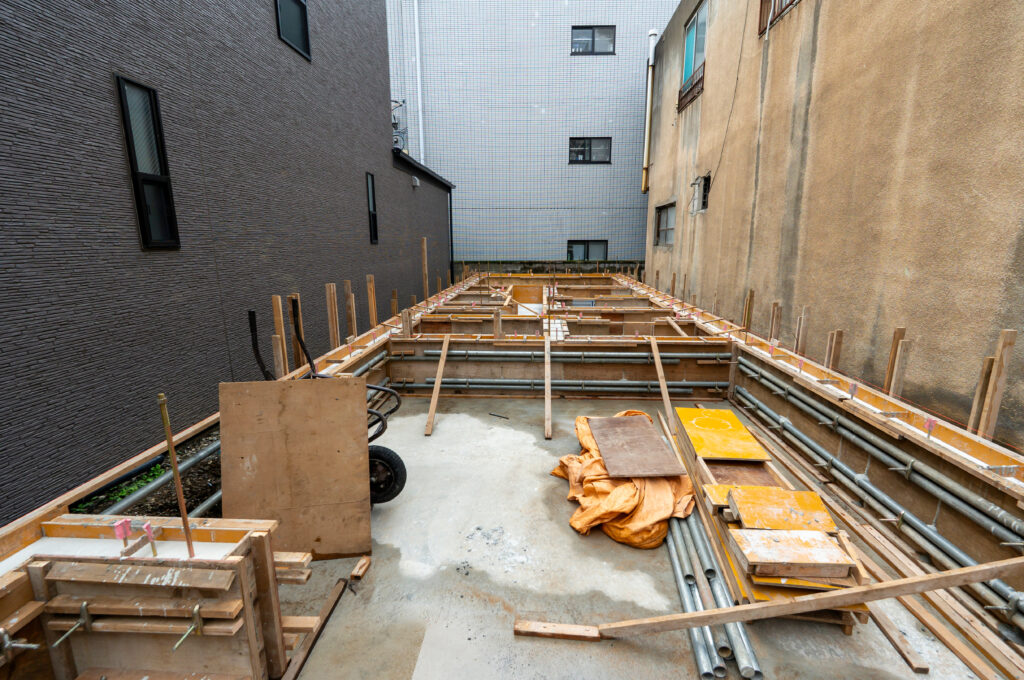
Before foundations can be installed, several essential groundwork stages must be completed to ensure the site is suitable for construction. The foundation preparation process involves assessing ground conditions, clearing the site, carrying out excavation, managing groundwater and checking that the excavated areas meet the project’s engineering requirements.
For developers and project managers, understanding these stages is important because delays or unexpected conditions during groundwork can affect the wider construction programme.
What Must Happen Before Foundation Installation?
Before foundation installation can begin, the site generally needs to undergo:
- Ground investigations and assessment of site conditions.
- Site clearance and preparation.
- Setting out and excavation to the specified dimensions.
- Groundwater management and any required drainage arrangements.
- Inspection and approval of the excavated ground before concrete is placed.
The exact sequence depends on the development, ground conditions, foundation design and applicable inspection requirements.
Why Are Ground Investigations Important Before Excavation?
Ground investigations help establish whether the underlying soil and rock conditions are suitable for the proposed foundations.
Depending on the project, investigations may identify:
- Soil type, strength and bearing capacity.
- Groundwater levels and potential water ingress.
- Made ground, contamination or unsuitable material.
- Existing underground services and obstructions.
- Conditions that could affect foundation depth or design.
The findings inform the structural engineer’s design and help contractors plan the excavation works.
For larger residential and commercial developments, identifying these factors early can reduce the risk of unexpected changes once construction begins.

How Is A Site Prepared For Foundation Excavation?
Site preparation establishes a safe, accessible working area before excavation starts.
This may involve removing vegetation, existing hard surfaces, debris or redundant structures. Access routes, machinery movements, material storage and the location of underground services must also be considered.
Site levels and foundation positions are then set out using the approved drawings.
Where significant changes to ground levels are required, bulk excavation may be necessary before individual foundation trenches or excavations can be formed.
Effective coordination during this stage helps ensure excavation works can proceed in the correct sequence.
What Happens During Foundation Excavation?
Excavation involves removing soil to the dimensions and levels specified in the foundation design.
The required depth and width depend on factors including ground conditions, structural loads, nearby structures and the type of foundation being installed.
During the foundation preparation process, contractors must consider excavation stability, safe access, underground services and the movement or disposal of excavated material.
If unexpected ground conditions are encountered, work may need to stop while the findings are assessed by the relevant engineer.
Excavation dimensions or foundation depths should not be changed without appropriate technical approval.
How Do Groundwater And Drainage Affect Foundation Preparation?
Water entering an excavation can affect ground stability, working conditions and the suitability of the formation level.
Where groundwater or surface water is present, suitable management measures may be required before foundation installation proceeds.
These could include temporary pumping, controlled water diversion or changes to the construction sequence, subject to site conditions and relevant permissions.
Permanent drainage systems also need to be coordinated with foundation layouts and underground services to avoid conflicts later in the build.
What Checks Are Required Before Concrete Is Poured?
Once excavation is complete, the formation level must be checked against the approved design.
Depending on the project, checks may include:
- Confirming excavation depth, width and position.
- Assessing whether the exposed ground matches the expected conditions.
- Removing loose, softened or unsuitable material.
- Checking groundwater and excavation stability.
- Obtaining required inspections or approvals.
Building Control, warranty providers or project engineers may need to inspect the excavation before concrete placement.
These checks are an essential part of the foundation preparation process because they help establish whether the excavated ground is suitable for the designed foundations.
Frequently Asked Questions
How Long Does It Take To Prepare A Site For Foundations?
The timeframe depends on the size of the development, site accessibility, ground conditions and extent of excavation required. Smaller sites may require less preparation, while larger developments can involve several stages of groundwork before foundation installation begins.
Can Foundation Work Take Place During Wet Weather?
Foundation work can sometimes continue during wet weather, provided excavation stability, ground conditions and site safety are not compromised. Heavy rainfall may soften exposed ground or cause water to accumulate, requiring additional checks or temporary protection before work continues.
What Happens To Soil Removed During Foundation Excavation?
Excavated soil may be reused elsewhere on the development if it is suitable and permitted under the relevant requirements. Material that cannot be reused must be managed and removed through appropriate waste procedures, with additional controls where contamination is present.
Do Trees Affect Where Foundations Can Be Installed?
Yes. Nearby trees can influence foundation design, particularly where shrinkable clay soils are present. Tree species, distance from the proposed building and ground conditions may need to be considered by the foundation designer. Tree protection requirements can also affect excavation methods.
Can Existing Foundations Be Reused For A New Development?
Existing foundations may be suitable for reuse in certain circumstances, but their condition, dimensions, structural capacity and compatibility with the proposed building must be assessed. A structural engineer should determine whether reuse is appropriate before construction proceeds.
Planning The Groundwork Before Foundations Begin
The foundation preparation process is directly connected to the wider construction programme. Ground investigations, excavation, drainage and inspections all need to be coordinated before foundation installation can proceed.
At South East Groundworks, we support developers and contractors with groundworks, excavation and foundation installation across Kent and the South East.
If you’re planning a development and need to discuss the groundwork requirements, our team can review your project information and advise on the next steps.
Contact Us